THE STAGE 32 LOGLINES
Post your loglines. Get and give feedback.

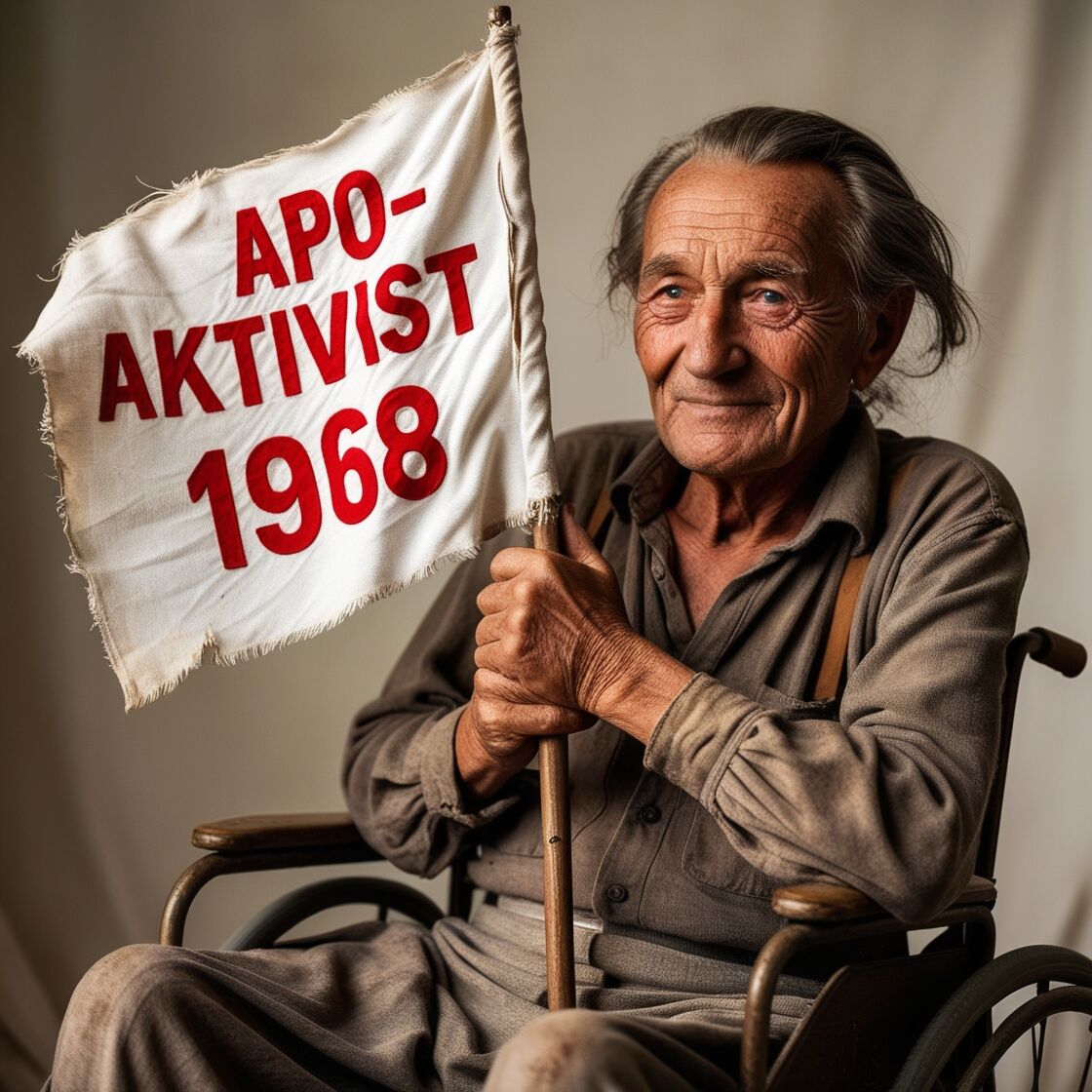
OTTO TEUFEL - FROM APO-ACTIVIST TO NURSING CARE CASE
By Ruby Con
Poor, old, sick, what to do? Prison instead of a nursing home?
German society is heading for disaster. Everyone sees it. No one can do anything about it. Everyone looks away. They hope it won't be so bad. But it will be much worse. Several generations of aging people face poverty and loneliness in old age. What can be the solution? Isn't a prison the same as a nursing home? Isn't freedom just an illusion, at best a feeling for movement and consumption? This screenplay doesn't offer a solution; it merely holds up a mirror to us – tragic, satirical.
SYNOPSIS:
Template: Screenplay, 80 pages, German and English
Format: TV movie, two-part, 60 minutes each
Genre: Tragicomedy and social satire
Main topic: Poverty in old age, age-related illnesses, loneliness, social coldness, public invisibility
Side topic: A journey through German history: the 1968 era, the APO movement, Kommune 1, Benno Ohnesorg, the squatters' movement, the founding of the Green Party
Playtime: Present day 2025 / Memories as flashbacks from 1968
Location: Berlin Marzahn; apartment, bank, police station, prison
Storyline:
Otto Teufel, the younger brother of Fritz Teufel, born on July 7, 1945, is, like Fritz, a political activist of the 1968 movement. However, he never amounted to anything, not even as a terrorist could he make a name for himself. Always too stoned, he invariably overslept when attacks were being planned. And he was always late to demonstrations, usually after midnight, when it was all over.
He had repeatedly borrowed money from his brother Fritz and Rainer Langhans to finance his drug-fueled rejection of bourgeois society. His rejection was so radical that he stole from the residents of Kommune 1 to get marijuana. When they expelled him from the commune by committee decision, his career as a political activist was over. From then on, the social welfare office was responsible for him.
Otto, a 74-year-old pensioner and former APO activist, suffers from arthritis. He is single and completely destitute. Due to his illness, he is dependent on medical care. He faces a slow, agonizing end on the streets. Otto cannot afford a nursing home on his small pension. In contrast, humane prison is a real alternative: free room and board, a single room with a television, medical care, and supervised exercise in the yard. Otto gets the idea to rob a bank. His rational considerations are three simple options:
Option 1: He can escape with the money and live a carefree life from now on.
Option 2: He is caught by the police and goes to prison, where he can also expect a carefree retirement.
Option 3: He is shot by the police while on the run. Then at least his agonizing life would be over; death would be a release.
All three options seem far better to Otto than a lonely, sickly decline. But things turn out quite differently than planned: The bank Otto intends to rob is itself robbed by "real" bank robbers. Otto is able to outsmart these robbers using his knowledge of the APO (Extra-Parliamentary Opposition), allowing the police to overpower them. Furthermore, Otto unexpectedly comes into possession of the robbers' loot.
At the police station, the chief inspector questions Otto. She quickly realizes that he is simply an old man seeking help and develops understanding and sympathy for him. Otto confesses that he wanted to rob the bank just to escape this helpless life. Unexpectedly, a philosophical discussion about the concept of freedom ensues. Otto primarily associates freedom with freedom of movement and consumption. But when you are old, sick, and destitute, freedom of movement and consumption lose their meaning.
Intention:
Society is heading towards a catastrophe. Everyone sees it. No one can do anything about it. Everyone looks away. They hope it won't be so bad. But it is much worse. Several generations of aging people face poverty and loneliness in old age. What can be the solution? Isn't a prison the same as a nursing home? Isn't freedom just an illusion, at best a feeling of freedom of movement and consumption, but without including thoughts, since these are always free?
OTTO TEUFEL - FROM APO-ACTIVIST TO NURSING CARE CASE
View screenplay Register / Log In
