THE STAGE 32 LOGLINES
Post your loglines. Get and give feedback.

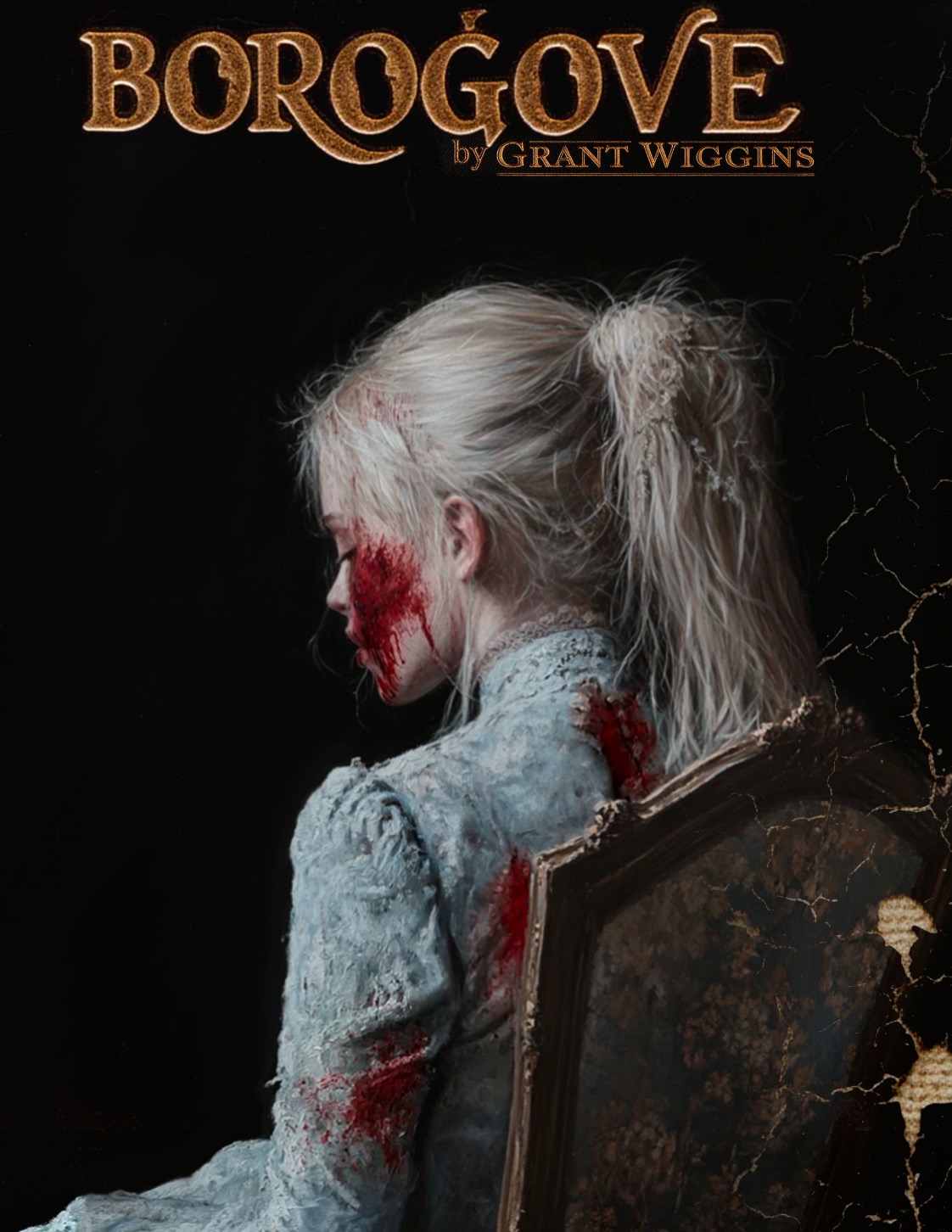
BOROGOVE
By Grant “Wiggy” Wiggins
SYNOPSIS:
Blacklist reader: BOROGOVE is a disturbing, ambitious project, and the writer is unafraid to take us to some supremely dark places. These pages' juxtaposition of children's fantasy and real life atrocity has some legitimately traumatizing potential, and this gothic horror show feels unlike any other modern genre spec. This isn't the easy "goth" inversion of ALICE we've seen in past properties like American McGee's video game. Instead, this is an elemental, deeply upsetting collision of innocence and depravity-ALICE written by Sade. Eskell is a fearsome, repugnant creation, and his dialogue-grotesque as it is-may be the strongest, combining a sort of baroque charisma with some brutally awful sentiments. Complementing Carroll with sources like Poe and Wilde, the script's references are not flippant but knowledgeable. In its sharpest moments, the project is reminiscent of Alan Moore's comic works (e.g., LOST GIRLS, THE LEAGUE OF EXTRAORDINARY GENTLEMEN), deft literary patchworks that treat their fictional devices with unflinching realism. BOROGOVE is absolutely not for everyone, but those who can stomach it and see the weird beauty that it's striving toward will have to respect this bold attempt. There is nothing like this in the horror spec world, and the project does demonstrate an uncompromising vision that will make people take notice. BOROGOVE could become a real reputation maker for its author.”
”This is the weirdest and most original script I've ever read. I don't even know what to say. It's so clever and funny and fun, and yet seems completely un-sellable and unmarketable. You are a true original. I think it's insane and has a touch of brilliance. You have a true voice of your own and that's so valuable.” ~Lisa Jay
“I think it may be some of the best writing I’ve ever read. Your dialogue sparkles with personality, each character with their own distinct voice.” ~Grant Vetters
Storypeer: This is a fascinating script: a salacious take on classic gothic horror with energy and verve of a Knives Out movie but which spirals into often delightful insanity. A big strength of this script is that this script is very funny, in a surreal way.
Even the worst and darkest characters come off as ridiculous figures in a grimly comic way. There are genuine horrors presented here, but I feel the monsters (particularly the human ones) are presented in such a way as to mock their cruelty. It's a good move in that it makes them creatures entitrely of the world of the film: horrifying in their way, but too ludicrous to follow the viewer home.
From the moment we meet Eskell, he is an absurd figure: a self-made caricature of the profoundly toxic masculinity of the era. His grandiose self mythologizing descriptions of his hunting exploits to Wilton give way to equally bombastic honesty about the goings-on in his home. He also captures a certain complexity of terrible father figures. He is an undoubtedly crass, brutal, cruel beast of a man; and yet he is cavalierly accepting of his daughter's Sapphic tendencies, and in a perverse way a cheerleader for her success (even if he encourages that success be acquired through the same homicidal means as his own).
Fordy is a fascinating character: clearly a product of her environment yet struggling with all that that implies. She feels like the kind of character Emilie Autumn would make a concept album about. Fordy recognizes the complex forces that have shaped her and (though she attempts to hide a lot about herself) seeks to improve. Her desire to break the cycle of generational trauma makes her the most grounded and relatable character here. She is a perfect surrogate through which the audience can engage the insane world of Borogove Manor.
The parallels to Alice in Wonderland (as well as the works of Poe and Wilde) are frequently handled in genuinely intriguing ways. The Cheshire Cat, particularly as encountered by Ben and Eskell, is a horrifying and profoundly unsettling grotesquerie. Even as we are witnessing some monstrous behavior from the human villains of this tale, the Cheshire Cat rises up to give us a glimpse into the eldritch horrors of the Tulgey Wood that have only been hinted at up to that point.
The voluminous threads of conspiracy, deception, and betrayal make for complex story that often threatens to completely derail but which you manage to rein in when needed. The reveal of Eskell's perverse parental taxidermy is horrifying yet fitting. It sums up the man and explains the depths and duration of his own madness.
In all this is an audacious piece of work: grand in scope, focused in its vision, and presented in a unique way with a voice that is entirely its own.”
—Similar films:
• The Others •
• The Favourite •
• Withnail and I •
• The Lighthouse •
• The Grand Budapest Hotel •
• Crimson Peak •
• The Cook, The Thief, His Wife & Her Lover •
• Barry Lyndon •
• The Shining •
• The Fall •
• Picnic at Hanging Rock •
Breakdown: You’ve captured that uneasy intersection of fantasy and psychological horror with the manor and forest as both stage and psyche with dialogue that feels theatrical yet lived-in, like Poe meeting Kubrick. The writing is rich, rhythmic, and deliberate, drenched in decay and elegance. It’s literary but cinematic, haunting but sardonic, and uniquely yours. A dark fairytale about power, legacy, and the stories we trap ourselves in.”
In the late 19th century, far into the English countryside outside of London is Borogove Manor. A monument to conquest and decay.
A patriarchal hunter has filled it with both animal and human trophies. His daughter one of them, brilliant but trapped in a cage of privilege, she navigates a maze of his cruelty and her own forbidden love and when her mother returns under mysterious pretenses and brings with her threats, a stolen heirloom and insane constable. The manor unravels. Reality and nightmare become one as buried sins rise from walls and minds as she begins to uncover her past to face the present with the help of the Cheshire Cat. Borogove is a gothic- psychological tragedy. A fever dream of repression, rot, and inheritance, inspired by Lewis Carroll’s verses and the decaying beauty of Victorian England. ———
BOROGOVE
View screenplay Register / Log In

Rated this logline
Rated this logline
Rated this logline
Rated this logline
Rated this logline
Rated this logline
Rated this logline
1 person likes this
Hi Wiggy, the word "them" in the middle of this logline is confusing.
Does it mean this: An heiress fights for her sanity when the Cheshire Cat leads her back to Wonderland to piece together her broken memories, while her family, lover and servants collude to keep her in the dark or put her in the ground.
Patricia Milton You’re correct. It does. It’s been probably 10-15 versions of this logline. Possibly as many as 20.
It’s just a lot going on in this script so it’s been a fight to try to cover the scope of it in a concise way and not do what the grand Budapest hotel (Its’ vibe inspiration) did with theirs and just let it be two paragraphs.
One true lead, human chess game amongst several players.
Rated this logline
Rated this logline
Thank you Edward Learman and everyone who has rated.
Rated this logline
Rated this logline
Rated this logline
Rated this logline
Rated this logline
Rated this logline
Rated this logline