THE STAGE 32 LOGLINES
Post your loglines. Get and give feedback.

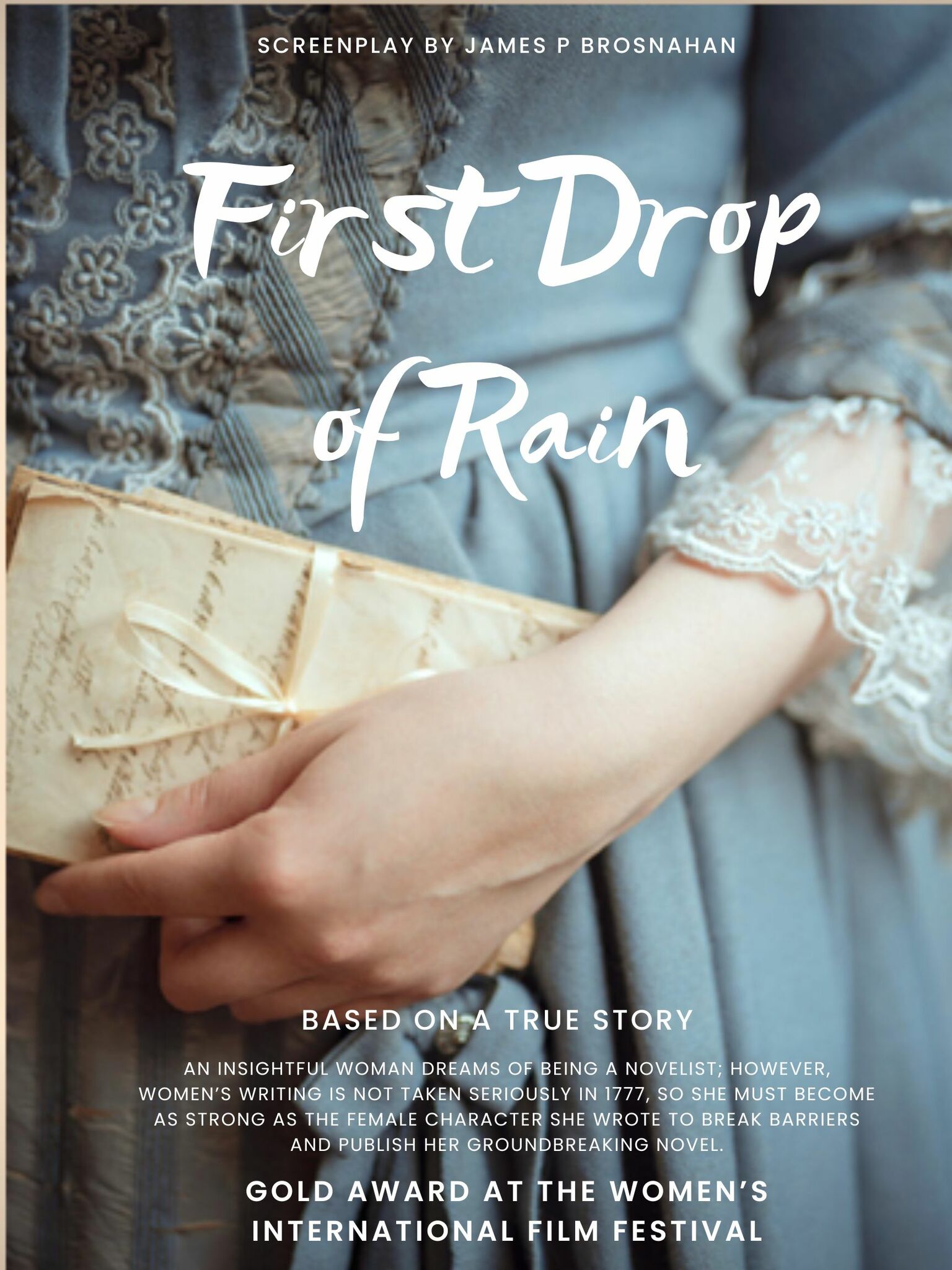
FIRST DROP OF RAIN
By James Brosnahan
In 18th-century London, an imaginative and introspective young woman defies social constraints and her father’s expectations by secretly writing a novel that will one day make her one of the most important literary voices of her time.
SYNOPSIS:
Frances Burney writes in secret by candlelight, her ink-stained fingers crafting sophisticated prose far beyond her fifteen years. When her father Charles discovers her manuscript, he burns it—not from cruelty, but because "these pages are too good." Charles remarries Elizabeth Allen, a woman haunted by generational trauma who becomes the sophisticated antagonist who embodies how victims of oppression often become its enforcers. As Frances navigates the performance of femininity, she forms a forbidden friendship with Hugh Lowe, son of publisher Thomas Lowe, while capturing the attention of opera tenor Miles Hazelton, who offers love and security—but only if she abandons her authentic voice.
Working as the secretary to literary patron Mrs. Thrale, Frances discovers a library of women's works and begins writing Evelina in secret—teaching herself a masculine hand to disguise her gender, stealing supplies, writing through countless candlelit nights. When Mrs. Thrale submits the manuscript anonymously, Hugh unwittingly edits his friend's novel. After Thomas Lowe discovers Frances' authorship and orders the manuscript burned, Hugh makes an impossible choice: he burns his own ten-year poetry collection to produce convincing ashes, then uses his entire inheritance to secretly publish Frances' novel.
As Evelina becomes London's literary sensation, Frances faces her defining choice: accept Miles' proposal and write only in secret, or fight to claim her own voice. When she chooses authenticity over security, the ripple effects transform everyone around her. The resolution shows the transformative power of one person's courage—Frances' success opens doors for other women writers, including her stepsister Eliza (who would publish 26 novels), her sister Susan, who reclaims her musical voice, and Elizabeth, who finally understands Frances and reconciles with her. The epilogue directly connects Frances to Jane Austen and the generations of women writers who followed.
WHY THIS STORY MATTERS NOW
While set in the 1770s, FIRST DROP OF RAIN resonates powerfully with current conversations about women's voices and authentic self-expression. The screenplay explores timeless questions: What is the cost of conformity, and what is the price of authenticity? How do we dismantle systems of oppression when those who love us most are complicit in maintaining them? What does it mean to choose yourself when society demands you shrink?
The film's central metaphor—the first drop of rain—beautifully unifies the narrative. Frances' birth mother tells her that "the first drop of rain is the bravest; it falls without knowing if others will follow." This becomes Frances' legacy: her courage creates space for others to be brave. One person's authentic voice enables a revolution.
Importantly, the screenplay avoids didacticism by grounding universal themes in Frances' specific personal journey. The sophisticated understanding of how patriarchal control masquerades as care—Miles genuinely believing he loves Frances while fundamentally misunderstanding who she is—creates nuanced drama that trusts audiences to grasp embedded themes without over-explanation.
COMPARABLE FILMS
LITTLE WOMEN (2019) — PORTRAIT OF A LADY ON FIRE (2019) — BECOMING JANE (2007)
UNIQUE SELLING POINTS
- Direct Jane Austen Connection: Frances Burney's Evelina pioneered the novel of manners and directly inspired Austen. This connection provides built-in audience recognition and cultural cache.
- Complex Female Characters: Elizabeth Allen transcends the "wicked stepmother" trope to become a woman shaped by generational trauma who perpetuates the very oppression that victimized her family.
- Nuanced Romance: Miles Hazelton avoids villainy through authentic characterization—he genuinely loves Frances but cannot see her as a complete person, perfectly capturing how patriarchal control masquerades as protection.
- Ripple Effect Ending: The resolution shows Frances' courage, enabling other women—her sister Susan reclaiming her musical voice, stepsister Eliza beginning her writing career (26 published novels), and ultimately inspiring Jane Austen herself.
CASTING APPEAL
The role of Frances Burney offers a dream opportunity for a talented actress seeking substantial dramatic material. The character's arc—from frightened fifteen-year-old to confident woman claiming her voice—provides showcase moments for emotional range, intelligence, and authentic transformation. Supporting roles (Elizabeth, Miles, Hugh, Mrs. Thrale, Susan, Charles) offer equally rich opportunities for exceptional character work.
CONCLUSION
FIRST DROP OF RAIN balances commercial appeal with artistic substance. Frances Burney's story—a woman who risked everything to claim her voice and changed literary history—feels urgently relevant in our current cultural moment. Most importantly, at its core, it tells a true story that deserves to be widely known—the first drop that made way for others to follow.
 Register / Log In

Rated this logline
Rated this logline
Rated this logline
Rated this logline
Rated this logline
Rated this logline
Rated this logline
Rated this logline
Rated this logline