THE STAGE 32 LOGLINES
Post your loglines. Get and give feedback.

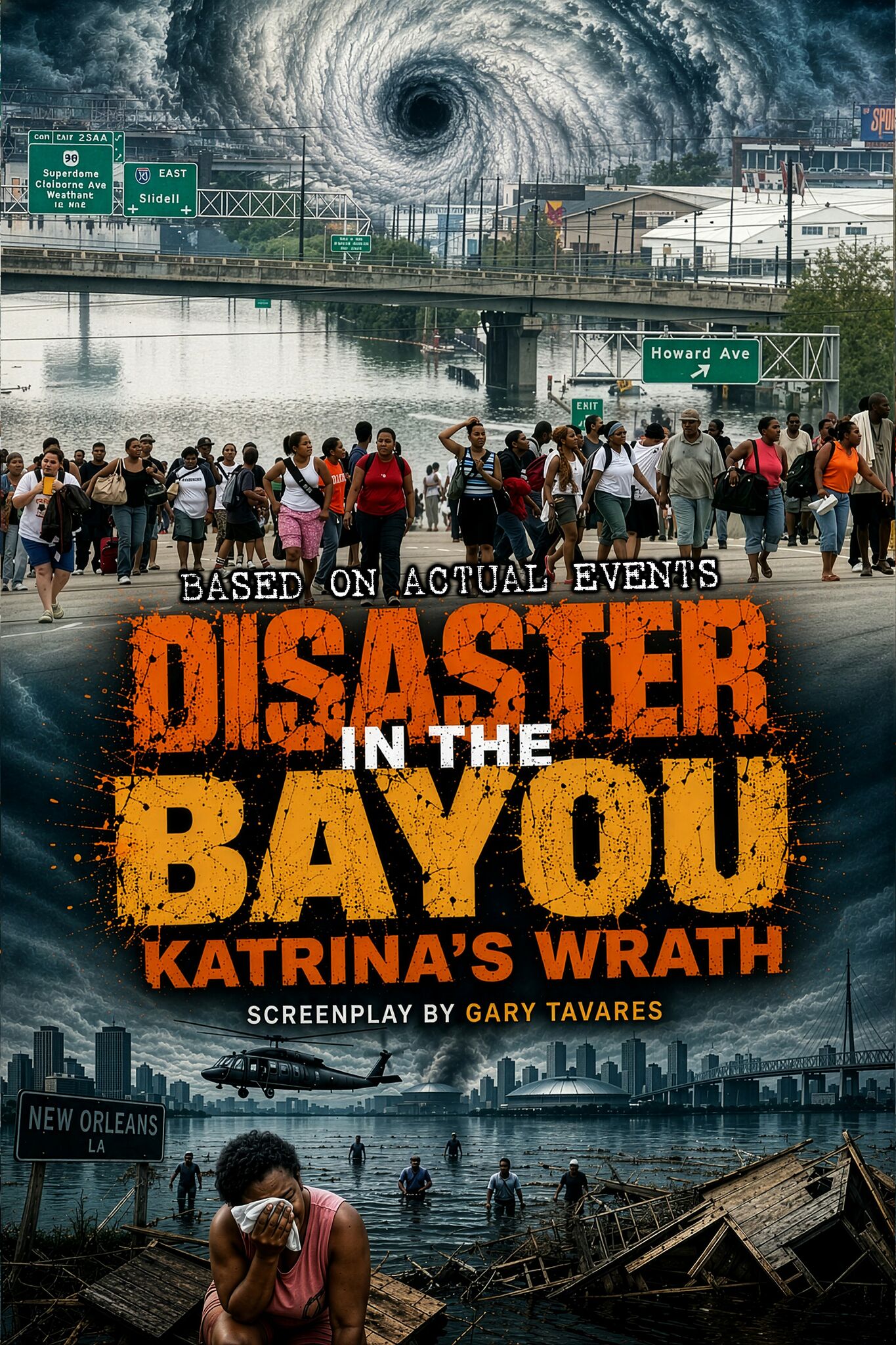
DISASTER IN THE BAYOU: KATRINA'S WRATH
By Gary G. Tavares
As Hurricane Katrina devastates New Orleans, a veteran firefighter races to save strangers across a drowning city while his own wife and children remain trapped in their flooded home, forcing a reckoning with duty, survival, and the institutional failures that turned a natural disaster into a national tragedy.
SYNOPSIS:
Disaster in the Bayou: Katrina’s Wrath is a compelling screenplay based on actual events. On the morning of Monday, August 29, 2005, Hurricane Katrina made landfall in New Orleans as a Category 3 hurricane. Later that day, several levees failed, triggering catastrophic flooding across the city. Set against the mounting terror of Hurricane Katrina, this ensemble disaster drama follows the lives of ordinary New Orleanians, first responders, public officials, journalists, and stranded families as one of the worst catastrophes in American history unfolds. At the emotional center is George Davis, a veteran New Orleans firefighter, whose family—his wife, Pat, and children, Derrick and Tameka—remains at home as he stays on duty, believing he can protect both the city and the people he loves. As Katrina intensifies from a tropical storm into a devastating monster bearing down on the Gulf Coast, the screenplay charts the city’s uneasy final days: evacuation orders, gridlocked highways, overcrowded shelters, public confusion, and the dangerous confidence of those who choose to stay behind.
When the storm finally hits, the screenplay expands into a sweeping portrait of collapse. Windows shatter, homes flood, levees fail, and New Orleans is swallowed by rising water. Pat and the children become trapped in their house as supplies run out and Tameka weakens from injury, infection, thirst, and exhaustion. Meanwhile, George and other firefighters, police officers, Coast Guard crews, National Guard units, medical workers, and volunteers launch desperate rescues by boat and helicopter, pulling survivors from rooftops, attics, cars, and debris-filled floodwaters. Across the city and along the coast, the screenplay dramatizes countless parallel tragedies: families torn apart, nursing home residents abandoned, hospital patients left without adequate care, and evacuees trapped in the Superdome and Convention Center under horrifying conditions.
At the same time, the screenplay sharply critiques the institutional failures surrounding the disaster. Politicians, emergency managers, and agency leaders debate blame as rescue coordination lags behind the crisis's scale. News coverage serves as both witness and indictment, documenting not only the natural destruction but also the human consequences of delayed response, broken infrastructure, and systemic neglect. As law and order deteriorate, looting, violence, and panic spread through flooded neighborhoods, forcing rescuers and law enforcement to operate in conditions resembling a war zone.
Yet amid the horror, the screenplay emphasizes resilience and courage. Strangers help one another survive; exhausted responders continue searching house by house; and acts of compassion emerge in shelters, hospitals, and rescue zones. George’s search for his family becomes the film’s central emotional engine, embodying the unbearable conflict between duty to the public and love for those closest to him. Ultimately, the screenplay presents Katrina not only as a storm but as a profound test of family, faith, public service, and national responsibility—a tragedy in which nature triggered the disaster, but human failure magnified it.
 Register / Log In

Rated this logline
Rated this logline