THE STAGE 32 LOGLINES
Post your loglines. Get and give feedback.

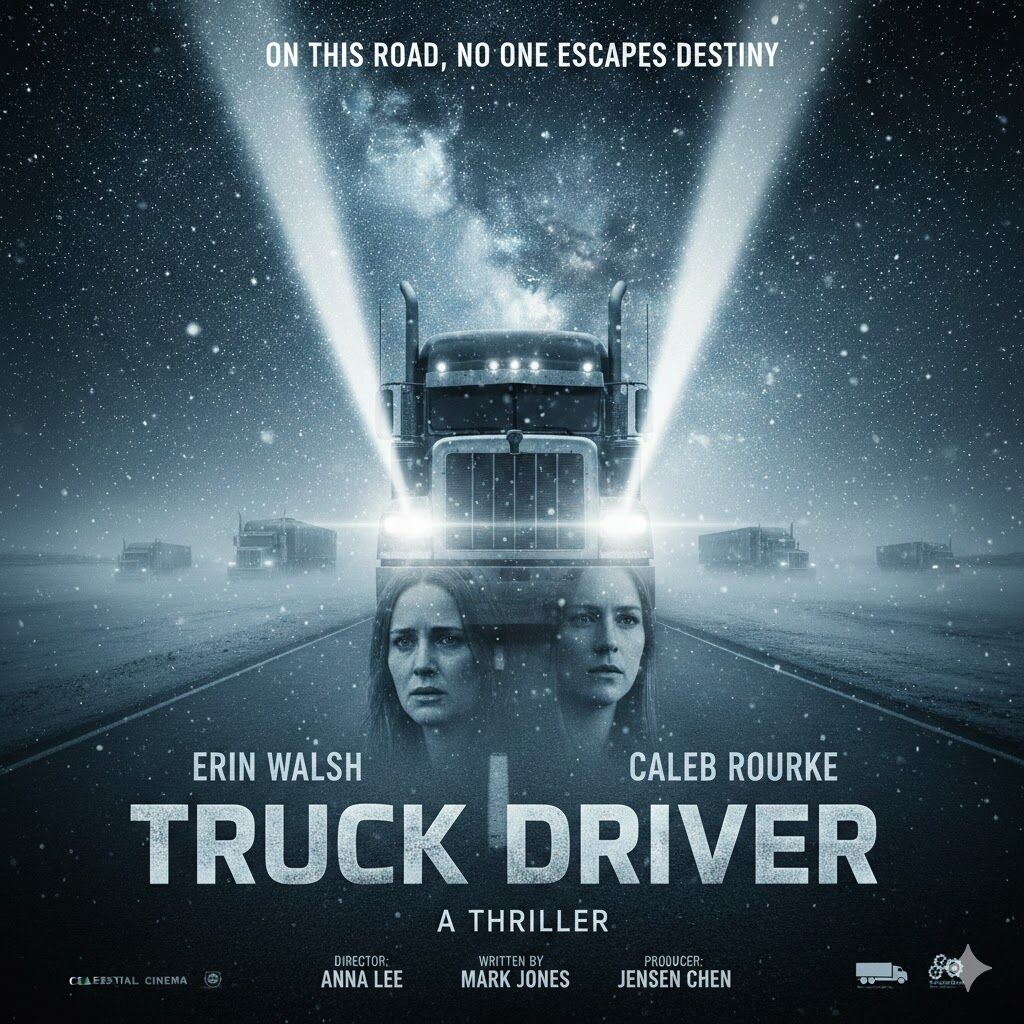
TRUCK DRIVER
By Joseph Murkijanian
When a grief-stricken insurance investigator discovers her sister's death is part of a pattern of highway disappearances, she transforms from silent witness into reluctant architect of a surveillance network—only to learn that stopping predators and preventing harm demand opposite skills.
SYNOPSIS:
ERIN WALSH doesn't know she's already counting before her sister AMY disappears.
Insurance fraud investigator by training, compulsive observer by instinct, Erin has been unconsciously cataloging patterns in vehicle recoveries and missing person reports for months. When Amy's body is found hypothermic on an Iowa highway shoulder—dismissed as "transient" by authorities—those patterns sharpen into terrible clarity.
Erin begins watching the interstate system with forensic precision. Rest areas. Truck stops. The rhythm of diesel engines and the language of CB static. She's not hunting a killer—she's counting ghosts.
At a hospital, she meets SARAH CHEN, the one who survived. Sarah's ADHD medication kept her conscious when CALEB ROURKE's sedative failed. Her testimony gives Erin something authorities won't: belief that the pattern is real. Together, they start documenting. Not for court. For memory.
Caleb is a ghost in plain sight—a polite, tired trucker who learned fifteen years ago that silence is complicity, and complicity is permission. A flashback reveals his transformation: the night he witnessed another driver's crime at a Wyoming rest area, hesitated with his phone in hand, then drove away. That choice—to look away—opened a door he could never close. Recruited, trained, normalized into the infrastructure of violence.
The corridor isn't organization. It's ecosystem. Drivers who recognize each other through bracelet tan lines and patient silence. A network that thrives on America's dependence on invisible labor and endless highway miles.
Erin's surveillance escalates. She follows Caleb to an Iowa bar where a young woman named REBECCA laughs too loudly. Erin calls FBI AGENT MERCER for backup—but protocol demands she wait. A train crossing separates them. By the time it passes, Rebecca is gone. Three days later, her body is found.
This failure breaks something in Erin—but also clarifies it. She's not trying to catch killers. She's trying to make harm inconvenient.
At a diner, she confronts Caleb directly. He's unsettlingly calm: "You're Amy Walsh's sister. She was scared. Made it harder." Then the psychological blade: "Des Moines. Outside the bar. You watched her leave with me." He knows her guilt. Uses it. "We're the same. We both count. The difference? I stopped feeling guilty."
Through Mercer, Erin learns the truth: Operation Corridor—a Cold War asset disposal program that never officially ended. Contractors who came home and turned the American highway system into infrastructure for disappearance. Not conspiracy. Evolution.
Erin breaks into Caleb's trailer and finds a living victim—a terrified nineteen-year-old in a hidden compartment. The confrontation turns violent. The trailer crashes. The girl survives. Caleb is extracted by corridor operatives, then killed when he becomes a liability. One monster dead. The ecosystem persists.
Now Erin faces a harder truth: attention creates consequences.
Sarah builds an encrypted network for civilian observers. Tips flow in. Patterns emerge. But so does chaos. An overeager watcher flags an innocent driver based on "behavior patterns"—the man loses his job, his reputation, his livelihood. The math of false positives becomes human cost.
Then: a woman disappears while Erin is too far away—following her own protocol about distance and restraint. The woman's abandoned car. The open door. The knowledge that Erin was close enough to see but not close enough to act.
There is no perfect distance. Ethics exist in paradox.
PAUL, a father whose daughter drives nights, tells her the only truth that matters: "There's no 'stop it.' There's only 'make it harder.'"
Erin pivots. Not hunting—engineering. She testifies at city council meetings demanding better lighting at rest areas, emergency call boxes, increased patrol presence. She doesn't chase trucks anymore. She makes isolation expensive.
Media exposure forces her into public view. A courthouse hearing examines whether civilian surveillance delayed law enforcement response to disappearances. Erin defends her methodology: "Belief is not evidence." / "Neither is silence."
A long-haul driver confesses to multiple murders. A body is recovered—but too late. Erin receives a message from a young woman: "A truck slowed. Then saw lights. Then left." Victory is invisible. A crime prevented produces no evidence.
The script ends not with resolution but equilibrium. Erin drives the interstate, checking her mirror. A semi follows, then exits. The space opens. She continues.
Her notebook's final entry: "Observation is care. Care is restraint."
The road hasn't changed. The watching has. And that difference—small, incremental, insufficient, necessary—is all that stands between infrastructure and anonymity, between disappearance and witness.
Some roads don't end. Someone has to keep watching them anyway.
Thematic StatementTRUCK DRIVER is a film about the impossible ethics of witnessing. It asks: What do you owe strangers? How much attention is enough? When does observation become obsession, and when does restraint become complicity?
It's a thriller about infrastructure—how America's highway system enables both commerce and violence, how visibility can deter harm, and how the most ethical outcomes produce no evidence.
It's an elegy for invisible victims and a manual for sustainable resistance: not heroic intervention, but patient, collective attention that makes predation inconvenient.
Ultimately, it argues that in a system designed to forget, remembering is rebellion—and the hardest part of resistance isn't starting. It's continuing after you've learned there's no finish line.
TRUCK DRIVER
View screenplay Register / Log In

Rated this logline
Rated this logline
Rated this logline
Rated this logline