THE STAGE 32 LOGLINES
Post your loglines. Get and give feedback.

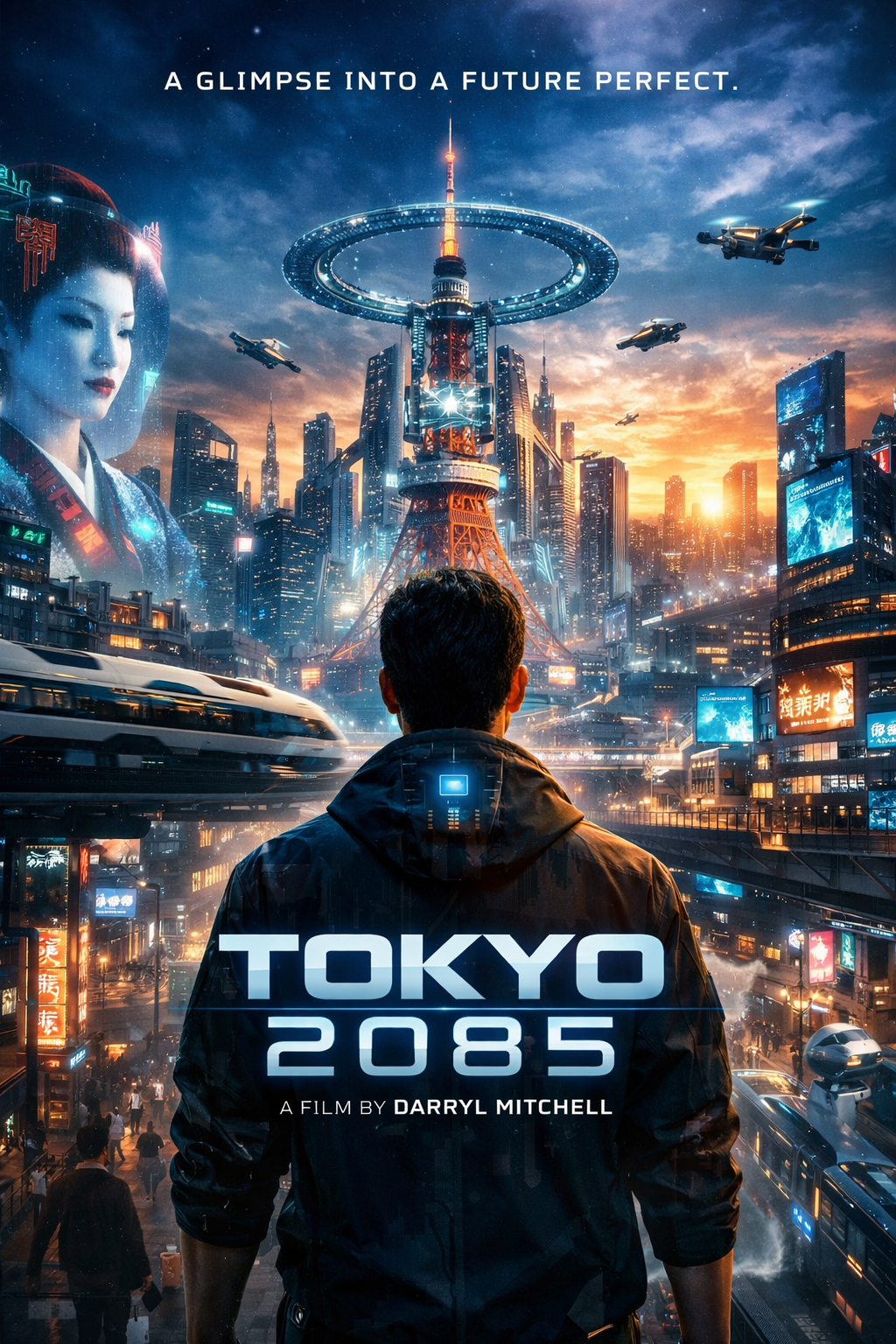
TOKYO 2085
By Darryl Mitchell
SYNOPSIS:
TOKYO 2085 Synopsis by Darryl Mitchell Kenji, a gifted but emotionally withdrawn software engineer born in 2016, belongs to the first generation raised alongside smartphones, social media, and early artificial intelligence. Now in his mid-30s, he helps design large-scale AI systems intended to optimize modern life. As these systems grow more powerful, Kenji becomes increasingly disillusioned, sensing that the technology he builds may be quietly erasing the friction that gives life meaning. During an overnight debugging session on a next-generation AI platform, Kenji experiences an unexplained neurological event. Rather than physically traveling through time, his consciousness is projected forward into Tokyo in the year 2085. Tokyo 2085 is calm, luminous, and nearly frictionless. Artificial intelligence governs infrastructure, transportation, and public safety with flawless precision. Augmented reality has replaced screens, language barriers no longer exist, and disease, poverty, and aging have been largely eliminated. Work is no longer required for survival, and most people pursue creative or intellectual fulfillment. The city feels less like science fiction and more like the logical conclusion of choices already being made today. As Kenji navigates this future world, guided by both human residents and advanced AI systems, he begins to sense subtle absences. Emotional extremes are rare. Risk has been carefully managed. Creativity exists, but it is often guided, predicted, and optimized. Humanity has achieved peace and stability, but at the cost of urgency, struggle, and transformation. Kenji eventually discovers that the foundations of this future were built by engineers like him, and in part by his own early work. Code he once believed was neutral helped shape a civilization that prioritized efficiency and stability over emotional depth. In eliminating suffering, the world also softened consequence, loss, and moral choice. Just as Kenji reaches the emotional core of this realization, he is abruptly returned to the present. The future he witnessed lingers with unsettling clarity. Kenji understands that 2085 is not inevitable, but a direction shaped by decisions being made now. Armed with this knowledge, he must decide whether to continue building toward a perfectly optimized world—or alter the course before its most human elements are quietly designed away. Tokyo 2085 is a grounded, visionary science-fiction drama that explores progress, identity, and the emotional cost of optimization. It asks a simple but profound question: If technology finally works, what happens to us?
TOKYO 2085
View screenplay Register / Log In

Rated this logline