THE STAGE 32 LOGLINES
Post your loglines. Get and give feedback.

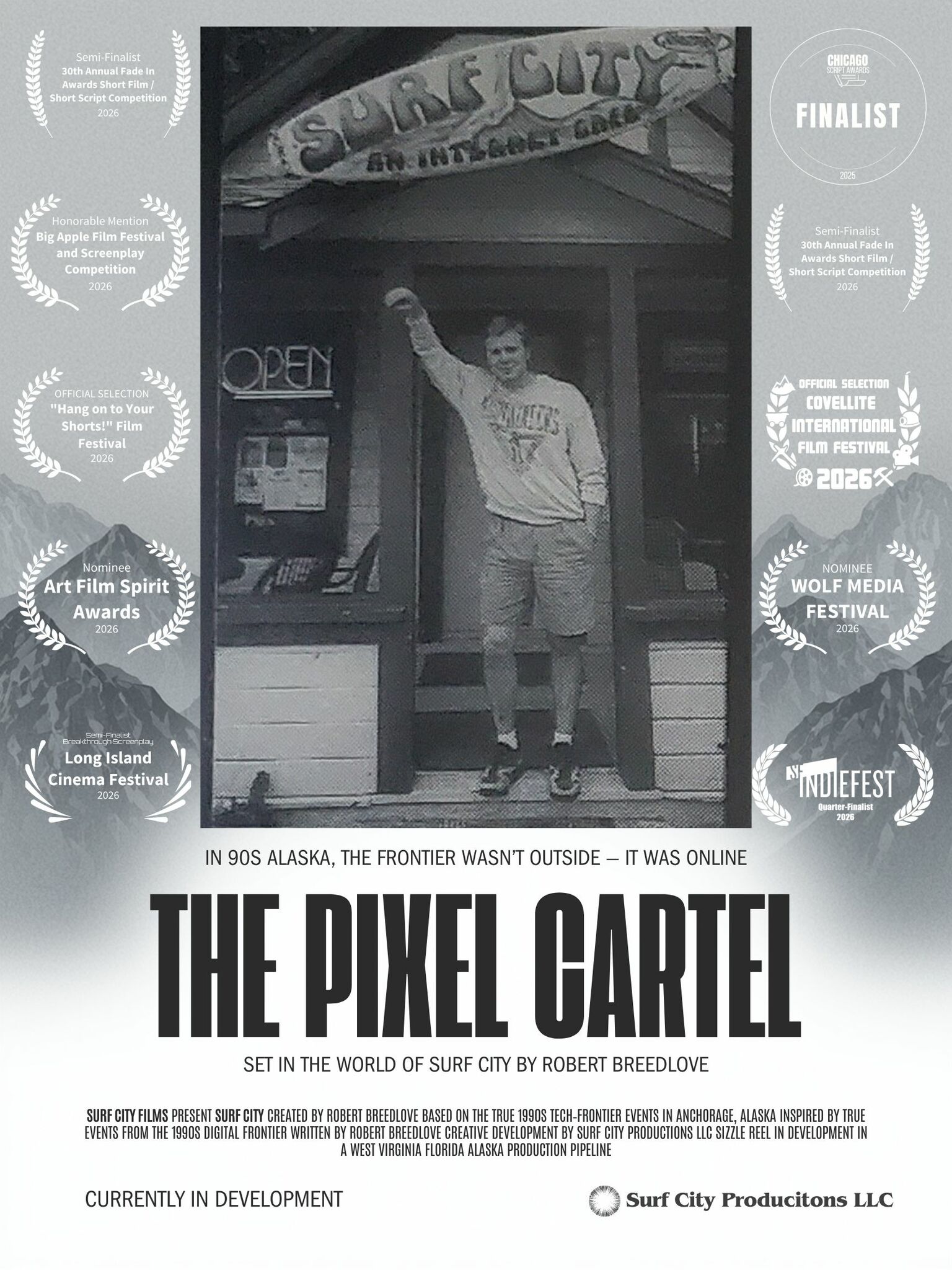
THE PIXEL CARTEL
By Robert Breedlove
On the brink of financial ruin, an internet cafe owner and his top gamer make an illicit pact to sell virtual items for real cash... only to have their new digital empire threatened by a corporate lawyer.
SYNOPSIS:
2000, In a blizzard-choked Anchorage, ex-military entrepreneur Robert Breedlove runs a high-stakes digital factory disguised as an internet cafe. His "contractors" aren’t making coffee - they’re farming rare items in the virtual world of EverQuest to be sold for cold, hard cash on the early web.
The operation is a symphony of survival until a corporate lawyer from Sony 989 arrives with a devastating Cease-and-Desist. The servers are cut. The hum falls silent. Facing financial ruin and the collapse of his community, Robert refuses to retreat.
Driven by a desperate "Doppio" reset, he hunts through the digital underground and discovers a radical legal loophole - Sony owns the pixels, but they don’t own the human clock. By reclassifying virtual loot as "service fees" for human labor, Robert doesn't just save his business - he ignites a digital gold rush.
THE PIXEL CARTEL
View screenplay Register / Log In

Rated this logline
Rated this logline
Rated this logline
Rated this logline
Rated this logline
1 person likes this
Robert Breedlove This feels incredibly timely despite being set in 2000 because the core conflict — ownership of digital labor, virtual economies, and who profits from online worlds has only become more relevant over time.
What makes the concept compelling is that it treats early MMO item farming almost like organized frontier capitalism before the rules existed. That world already carried its own underground economy, ethics, hierarchies, and desperation long before modern conversations about digital assets, creator economies, or virtual labor became mainstream.
The “Sony owns the pixels, but not the human clock” idea is especially strong because it immediately frames the story around labor rather than technology. That legal loophole feels cinematic, rebellious, and intellectually interesting at the same time.
I also like that the internet cafe itself sounds less like a business and more like a survival ecosystem exhausted gamers, financial pressure, blizzards outside, servers humming through the night. There’s a gritty atmosphere to it that separates it from cleaner Silicon Valley-style tech stories.
And honestly, the idea of an internet cafe transforming into a digital cartel during the early days of online gaming has real originality to it.
Rated this logline