THE STAGE 32 LOGLINES
Post your loglines. Get and give feedback.

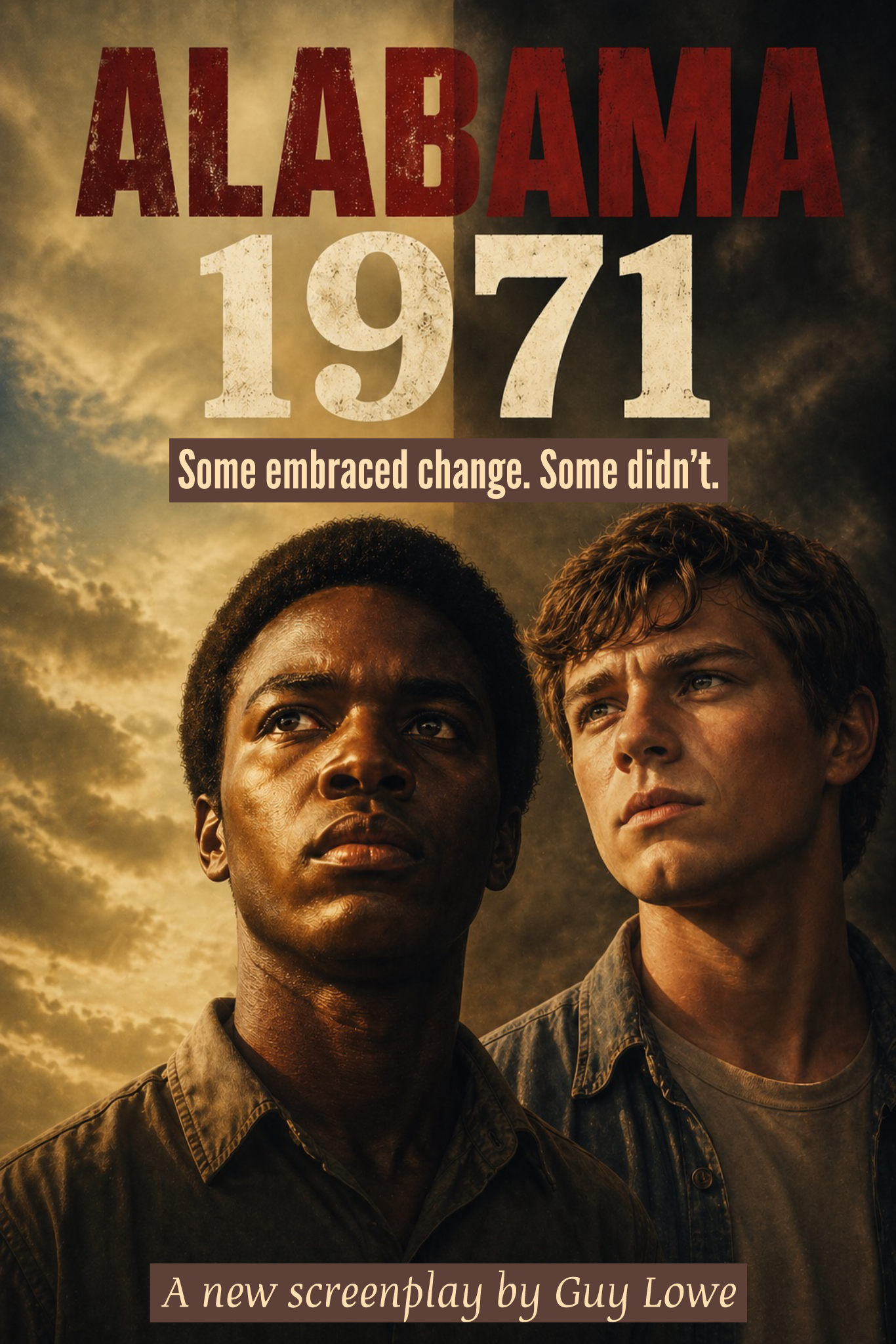
ALABAMA 1971
By Guy Lowe
SYNOPSIS:
Alabama 1971 is about two 15-year olds, one Black, the other white, who befriend each other at a formerly all-Black high school in a rural part of the state near Montgomery. Scotty, the white kid, is being bused to this school. All around are people who hate or are scared of the idea of integration. Scotty and Andrew have to process all that’s going on, while continuing to be buddies. They play together on the Washington School football team. They eat lunch together. And they confide in each other. Unfortunately, a group of men in the Montgomery area is determined to put an end to any interaction between Blacks and whites. They find out about Scotty and Andrew’s friendship, and that just adds more reason for them to bomb schools and churches in the area. They intimidate Andrew and Scotty by following them in trucks and harassing them. Scotty and Andrew decide to turn the tables on the men by finding out who they are and reporting them to the FBI. They don’t want to tell their parents for fear that the men will come after the parents. Meanwhile, the men are busy building bombs in a shed behind one’s house. It turns out that the FBI agent Scotty calls is in with the hateful men. The men decide they have to accelerate their plan to bomb Washington School. Eventually, Andrew and Scotty tell the coach what’s been going on, and the coach writes an anonymous letter to the FBI supervisor. The supervisor acts, but it’s too late to keep Washington School from being bombed. Andrew and Scotty help get the coach and custodians, who were the only ones in the school when it was bombed, out safely. The FBI ends up getting the men, including the rogue agent. Andrew finally comes to Scotty’s house for supper, an event that plays an ongoing part in the story. The film ends with the narrator, who is now 70-year old Scotty, commenting on busing and the times.
 Register / Log In

Rated this logline
Rated this logline
Guy Lowe This feels like a very human way into a difficult period of American history because the story isn’t approaching integration as an abstract political issue first it’s approaching it through friendship, fear, loyalty, and adolescence.
What stood out most to me is the contrast between the innocence of Scotty and Andrew’s connection and the hatred surrounding them. That tension alone creates emotional weight because the boys are simply trying to exist as friends while adults around them are consumed by violence and division.
I also think the football team, lunches, and small everyday interactions are important details because they ground the story in ordinary life instead of reducing it entirely to historical events. Those moments are what make the danger feel personal.
The rogue FBI element especially adds another layer of mistrust and helplessness that fits the era, where institutions themselves often failed the people they were supposed to protect.
And ending with an older Scotty reflecting back on the period gives the story a sense of memory and perspective rather than just trauma. It sounds like a film trying to examine how friendship survives inside systems designed to destroy connection.
Definitely feels emotionally relevant even decades later.