THE STAGE 32 LOGLINES
Post your loglines. Get and give feedback.

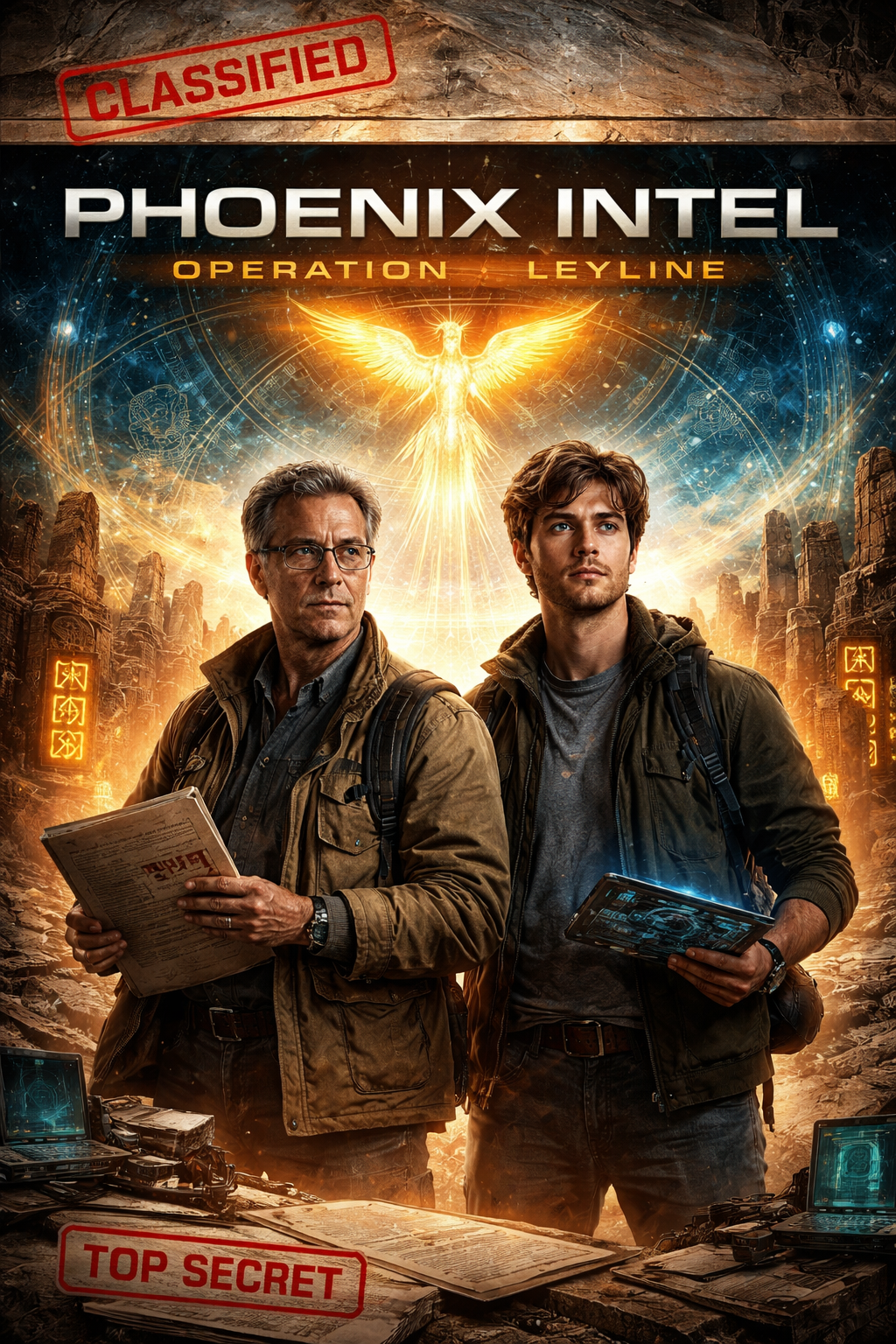
TOP SECRET MEMO ( PROJECT PHOENIX )
By Jay A Swendris
A classified archaeometric memorandum reveals that an ancient sarcophagus and its occupant are not relics of the past, but components of a unified system—one that merges symbolic archaeology, geospatial resonance, and human biology into a technology modern science cannot yet define.
SYNOPSIS:
An internal Level-7 memorandum from UCLA’s Department of Archaeometry documents the preliminary analysis of Specimen PHOENIX-1: a Bronze Age–appearing sarcophagus containing a living human subject. Led by senior archaeologist Dr. Henry Keller and systems analyst Dr. Jeff Reynolds, the report details a series of irreconcilable contradictions that defy established historical and scientific frameworks.
Keller’s analysis focuses on archaeological impossibilities—an artifact whose materials, symbols, and burial location suggest intentional alignment with geospatial energy convergence rather than cultural ritual. Ancient markings behave less like language and more like operational schematics, while the absence of identity inscriptions implies function over reverence.
Reynolds’ annotations translate these symbolic findings into modern systems logic, identifying the sarcophagus as a frequency-responsive interface and the subject as a closed-loop energy regulator capable of interacting with electromagnetic systems without destructive output. Together, their findings indicate the artifact, the location, and the occupant were designed as a single, integrated system.
The memorandum concludes that PHOENIX-1 is neither an archaeological anomaly nor a biological curiosity, but evidence of a technological paradigm that treats physics, biology, and environment as interchangeable components—raising questions not of origin, but of intent.
TOP SECRET MEMO ( PROJECT PHOENIX )
View screenplay Register / Log In

Rated this logline
Rated this logline