THE STAGE 32 LOGLINES
Post your loglines. Get and give feedback.

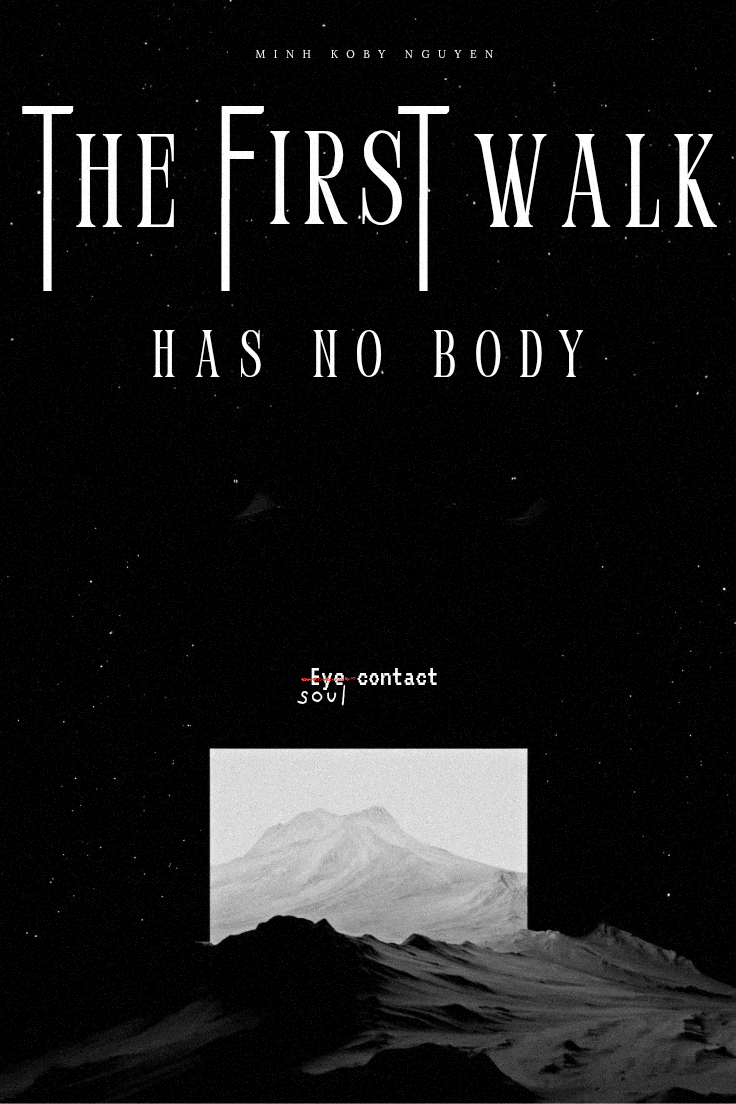
THE FIRST WALK HAS NO BODY
By Minh Nguyen
A man awakens without a body on a distant planet. Reduced to movement and silence, he encounters another presence and, as his function collapses, learns what it means to simply exist.
SYNOPSIS:
A man, at the end of his life, agrees to disappear.
His memories, thoughts, and inner voice are copied, engraved onto a chip, and transmitted as light across the void, toward a robot abandoned years earlier on a distant planet named Ermion.
He awakens without a body.
Without breath.
Only movement.
From afar, scientists observe and command him, reducing his existence to data, objectives, and lists of tasks to complete. He obeys, believing his sacrifice still holds meaning. Before leaving, he told his son that “up there,” he would remain forever, a promise suspended between love and illusion.
While exploring the planet’s silent surface, he detects signs of another machine. Another presence. Another consciousness. He reports the discovery to the scientists, who are unable to explain it. The two entities remain distant, moving separately across the same world, unaware of one another except through traces and disruptions in the landscape.
Its origin is unknown.
Its nature remains a mystery.
It does not speak.
It does not explain.
Yet something in its movements, glimpsed from afar, feels familiar.
Only later, slowly, without language, without purpose, the two beings begin to coexist. Fear gives way to curiosity. Distance becomes ritual. A fragile bond is born through gestures, pauses, and shared wandering, the first relationship neither of them was programmed to have.
When the research is complete, the truth finally emerges: the energy sustaining his consciousness is finite. When it fades, he will be erased completely. No archive. No return. No trace left behind.
Released from function, he chooses to stop serving.
He stays.
With the other soul, he spends his remaining time walking, observing, inventing meaning where none was intended. Not to survive. Not to escape. But to be present, briefly, fully.
On Earth, long after the transmission, the son grows older and understands the weight of his father’s promise. Above him, beyond reach, souls are sent into the universe to walk without bodies.
In several sequences, the character performs repetitive labor beneath vast, star-filled skies. These moments are occasionally accompanied by a familiar song from another world, Raindrops Keep Fallin’ on My Head, drifting softly through the silence, not as commentary, but as a lingering memory of a life that no longer has a body.
As time passes, fragments of sound begin to surface, not as music heard, but as something remembered. There is no source, no device, no explanation. The melodies do not enter the world; they emerge from what remains of him. They arrive slowly, incomplete at first, as if recalled without ears.
These moments are not memories of events, but sensations of having once been alive. The music does not accompany his actions; it interrupts them, drifting through the silence like a presence from another life, reminding him of warmth, rhythm, and intimacy long after the body has disappeared.
Director’s Note in comment...
 Register / Log In

Rated this logline
Rated this logline
Rated this logline
Rated this logline
Rated this logline
Rated this logline
Awesome logline
Thank you so much @Sydney S — really glad it resonates.
Rated this logline
1 person likes this
I loved reading your synopsis, this is a future sci-fi classic, can't wait to see it, well done.
Doing my best, thank you @Kevin Lenoble.
Rated this logline
DIRECTOR’S NOTE :
This film was born from a simple question: what remains of us when the body is gone?
The character at the center of The First Walk Has No Body does not lose his humanity when his body disappears. He loses the tools through which he once believed the world could be perceived. At first, he thinks he still sees. He believes perception continues through eyes, through distance, through observation. But slowly, something shifts.
Throughout the film, he carries a notebook and a pencil.
Not technology.
Not data.
Something fragile, human, and finite.
He writes what he lives. At first, his writing serves the mission, lists, observations, reports. The pencil is a tool, just like him. As time passes, the pencil wears down. It becomes shorter, weaker. The writing changes. What was once functional becomes personal. What was meant for others becomes something he writes only for himself.
The erosion of the pencil mirrors the erosion of his remaining time.
As isolation deepens, the environment around him begins to change. The planet, once perceived as an exterior space to explore and document, gradually becomes a surface for projection. In the absence of bodies, memories, desires, and fragments of love begin to appear. Not as clear visions, but as impressions: a child running, a feather falling slowly, a familiar walk beside a loved one. These moments are not memories replayed, nor hallucinations to escape reality. They are the imagination asserting itself as the last territory of presence.
The narration of the film is his voice, not explaining, not guiding, but existing. He speaks because there is no longer anyone to speak to. He writes because writing is the last gesture that still belongs to him.
At the beginning, when he encounters the other presence, he names it eye contact. This is the last reflex of a world he no longer inhabits, a world where perception depended on bodies, faces, and gazes. But by the end of the film, he understands that he no longer sees through eyes at all.
What remains is not vision, but resonance.
Not observation, but presence.
In the notebook, he crosses out the word eye and replaces it with soul. This correction is not symbolic. It is a realization. He no longer sees, he exists.
The pencil will eventually disappear.
The notebook may remain unread.
The body is already gone.
And yet, something persists: the act of being present, even briefly, even without purpose.
This film is not about technology, or the future, or machines. It is about what an existence becomes when usefulness ends, when function collapses, and when all that remains is the choice to stay, and to share that remaining time with another presence.
Above us, far beyond reach, souls are sent into the universe to walk without bodies.
This film follows one of them not to where he is going, but to what he becomes.
Rated this logline
Rated this logline