THE STAGE 32 LOGLINES
Post your loglines. Get and give feedback.

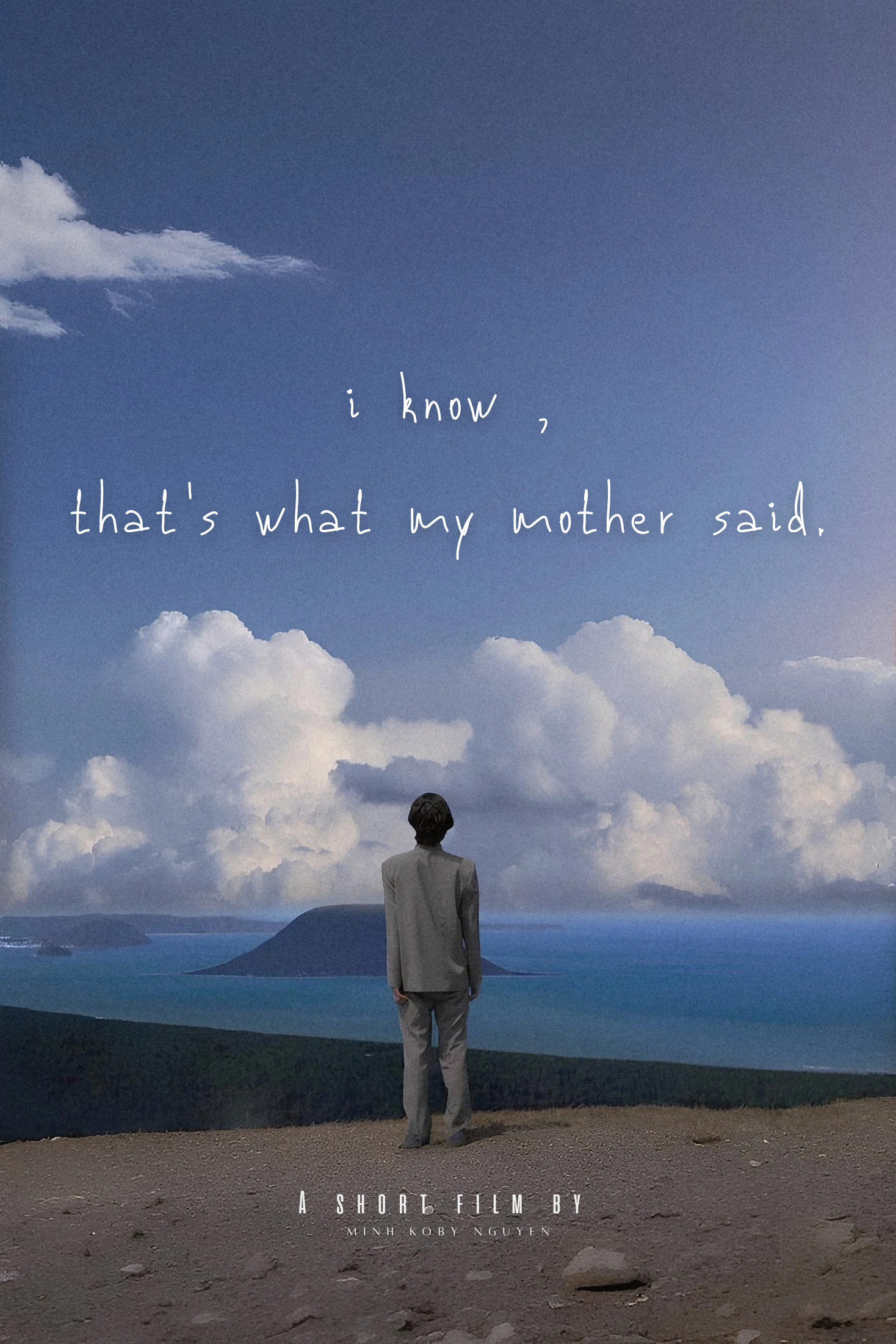
I KNOW, THAT'S WHAT MY MOTHER SAID (SHORT FILM)
By Koby Nguyen
SYNOPSIS:
A man moves through his day in the city like an invisible ghost. His existence is marked by solitude and forgetfulness: he speaks to passersby, but they do not hear him; he observes the world without truly belonging to it. In voiceover, he confides his regrets, his shame, and the burden of having lied to his mother about his life. As he wanders, he first visits his mother’s grave, a gesture of memory and respect, fully aware that she has already departed from this world. Along the way, he encounters a little girl who, with her simple and direct questions, encourages him to seek his place in the world. Guided by her advice, he walks toward a river where he used to go with his mother. There, in total silence, he finds her bathed in light, as if he were reconnecting with her presence in a timeless space, and embraces her. Through a subtle transition, the audience sees the child he once was, reunited in this act of love, evoking forgiveness and reconciliation with himself. The camera lifts toward the sky: an address appears on a worn sign, still and motionless, as birds suddenly take flight, a discreet reminder of his former life. No words are needed; the silence, the light, and the gesture are enough to convey the peace he has found. The film closes on this suspended image, leaving the audience free to interpret what has been lost, found, or forgiven.
 Register / Log In

Rated this logline
Rated this logline
Rated this logline
I Know – Short Film (10 min)
Detailed Description / Artistic Commentary
A man has lost everything: career, relationships, and even his savings, all gambled away in a fleeting hope at a game of chance. He wanders the city as if invisible, like a ghost. People never see him. His voice-over narrates shame, regret, and the lie he told his mother about living a “normal life.”
Opening:
He first visits his mother’s grave, a gesture of respect and memory, knowing she has already departed from this world. The cemetery is silent, the gravestones bathed in soft morning light.
Encounters:
Along the way, he meets a small girl sitting on a bench. Her voice is gentle but precise:
“You are lost, aren’t you?”
Her presence sparks something inside him. She asks simple, direct questions, guiding him to reflect on where he belongs in the world.
Journey to the river:
He walks toward a river where he once played with his mother. The camera lingers on his hands, the rhythm of his steps, the texture of the stones underfoot. No dialogue is needed—every movement conveys memory, hesitation, longing.
Reunion:
At the riverbank, in complete silence, he sees his mother, bathed in light as if outside time. He takes her in his arms. Through a subtle transition, the audience glimpses the child he once was, embracing the same figure. The moment evokes forgiveness, reconciliation, and peace, not with words but with gesture.
Symbolic details:
A street sign shows the name of his old neighborhood, grounding him in memory.
Birds rise into the sky, a visual metaphor for freedom, release, and the journey beyond life.
The silence, the soft light, and the natural sounds convey the weight of memory and the fleeting nature of presence.
Ending:
After the birds disappear into the sky, the camera returns to the river.
The same place where the man embraced his mother is shown again—but this time, they are no longer there.
The frame remains fixed.
Only the trees breathe.
Branches sway gently.
The river continues to flow.
No characters remain in the image.
The end credits appear over this unmoving shot, allowing time itself to pass. Life continues, quietly, indifferently, beautifully—suggesting that what mattered has already happened, and that reconciliation does not need to be seen to exist.
This short explores loss, regret, mortality, and the journey toward inner peace, showing how even beyond death, love, memory, and reconciliation persist. Cinematography is slow, intimate, and sensory, emphasizing subtle gestures, textures, and the poetry of ordinary life.
Additional Note / Intent
This film does not seek to determine whether the man is alive, dead, remembered, or imagined. His invisibility is not a narrative trick, but a state of being: the emotional condition of someone who feels erased by his own failures and regrets. The world does not ignore him because he is a ghost, but because he has already withdrawn from it.
The encounter with the little girl is not meant to be explained literally. She can be read as a guide, a mirror, or a fragment of his own inner voice, embodying innocence and truth. Her role is not to save him, but to gently point him toward the place where his story began, and where reconciliation is still possible.
The river is central: it represents time, memory, and continuity. It flows regardless of human pain, carrying both the past and the present. The reunion with the mother does not imply resurrection, nor fantasy, but an inner reconciliation. It is the moment when guilt dissolves, when the lie he carried loses its power, and when love exists without justification or explanation.
The final fixed shot, empty of characters, is essential. By removing the man and his mother from the frame, the film affirms that peace does not require permanence or spectacle. What mattered has already occurred. Life continues, quietly, beyond the individual story.
I Know is ultimately a film about accepting what cannot be repaired, and understanding that forgiveness is not granted by others, but allowed within oneself. Silence, light, and absence become the language of this acceptance, leaving space for the viewer to project their own memories, losses, and reconciliations.
Additional Artistic Note – Final Sequence
In the final approach to the river, the man’s appearance subtly changes. His adult clothing gives way to simpler, almost childlike garments, suggesting a gradual return to an earlier, more vulnerable state of being. This transformation is not literal, but symbolic: as he nears reconciliation, he sheds the layers of guilt, social identity, and shame that have defined his adult life.
When he reaches his mother, the man appears nude, filmed exclusively from behind. This nudity is never frontal, never exposed, and never sexualized. It represents a state of total vulnerability and truth, a return to an original, unprotected self, standing before the unconditional gaze of a mother. The camera remains at a respectful distance, following his back as he approaches her, emphasizing fragility rather than the body itself.
His mother, fully clothed, turns her gaze toward him and looks into his eyes. She does not see his body; she recognizes her son. As they embrace, the image gently transitions to reveal the man as the child he once was, held in the same gesture. The framing remains identical, focused on the upper body, preserving continuity and modesty. The mother closes her eyes as she embraces him, embodying acceptance, forgiveness, and love without judgment.
This sequence lasts only a few seconds, long enough to be felt, but never overstated. It is not about nudity, but about shedding illusion. Not about the body, but about the soul returning to its origin. The mother remains a figure of warmth and stability, while the man completes his passage toward peace.
This final transformation reinforces the film’s central theme: reconciliation does not come from explanation, but from presence. Before moving on, the soul must return to where it was first loved.
Rated this logline
Rated this logline