THE STAGE 32 LOGLINES
Post your loglines. Get and give feedback.

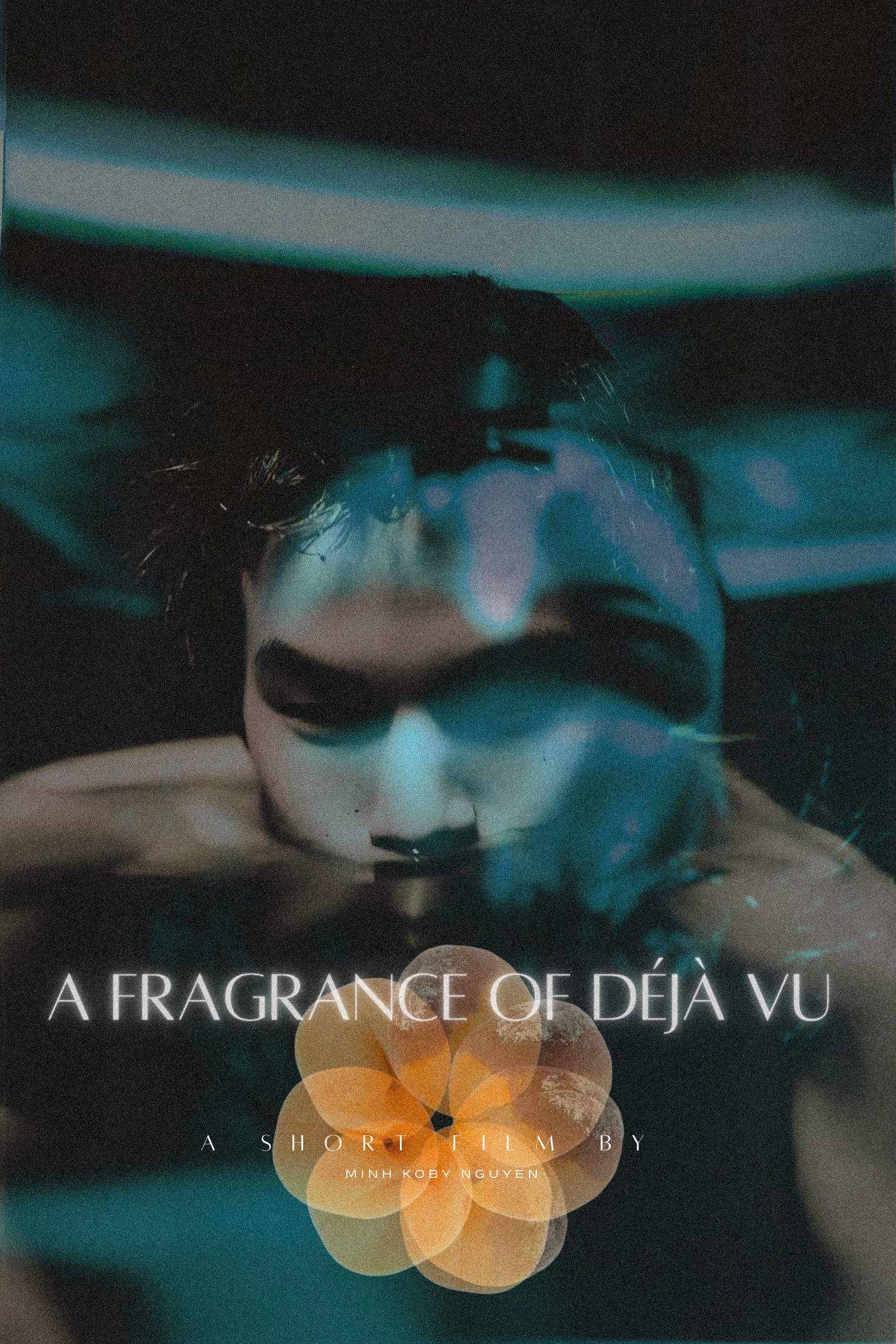
A FRAGRANCE OF DéJà VU (SHORT FILM)
By Koby Nguyen
SYNOPSIS:
A man lives alone in a cluttered apartment, suffocated by objects that no longer belong but refuse to leave. Through his voice-over, he speaks of something forgotten, something essential, something he once knew but can no longer name. After the death of his partner, he wanders the city at night, fragile and vulnerable, a ghost among neon lights and silent streets. He smells rotting apricots, clings to fleeting scents as if they could unlock memory. In the streets, he borrows moments of other people’s lives: taking a jacket left on a bar chair, being insulted, ignored, pushed aside. He speaks to strangers who do not listen. His solitude deepens, yet he continues searching. The city mirrors his inner disorder, filmed with sensual slowness, soaked in neon and silence, in the spirit of Wong Kar-wai. Back in his apartment, memory and identity blur. He dances alone, surrounded by clothes that could belong to a man or a woman. Gender dissolves. What remains is absence. He speaks to objects, to the ventilation duct, softly asking: “And you… are you sure you don’t remember?” The film never answers what was lost, or who. It only lets us feel longing, the reshaping power of grief, and how memory survives in scent, movement, or unanswered questions.
 Register / Log In

Rated this logline
Rated this logline
Rated this logline
Rated this logline
A Fragrance of Déjà Vu — Short Film (15 min)
Detailed Description / Artistic Commentary
After the death of his partner, a lonely man lives in a small, cluttered apartment. Objects overflow: clothes, books, papers, trinkets, remnants of lives once lived. Each item is a fragment of memory, a trace of what he has lost. The apartment is silent except for his breath and the sound of the duct, the faint sound of the city outside. It feels saturated, heavy, as if time itself has stopped moving.
Through his voice-over, he confesses a profound emptiness, a sensation he cannot fully name. He tries to remember: scents, textures, movements. He searches for what remains when words and images fail. He smells rotting apricots left in the kitchen, their sweet decay stirring a memory just out of reach. The odor lingers in the air, invasive and intimate. Every small sensory detail becomes a doorway to something forgotten, or almost remembered.
At night, he wanders the city streets. He revisits places that once mattered, guided not by logic but by instinct. In a small restaurant he and his partner used to frequent, he orders a dish, sits down, inhales its aroma for thirty seconds, and leaves without taking a bite. The restaurateur, accustomed to this ritual, mutters to a coworker:
“He does this every weekend.”
These visits are silent dialogues with the past, gestures that anchor memory in physical space.
He also borrows moments from other people’s lives. He takes a jacket someone left on a bar chair, only to be scolded or ignored by strangers. He speaks softly to people who do not hear him, gestures toward things that cannot respond. The city, filmed in long, slow takes, becomes an extension of his inner state: neon reflections trembling in puddles, rain-soaked asphalt, the distant hum of traffic. Vulnerable and fragile, he is never dangerous. His search is not for escape, but for connection and memory.
Back in the apartment, he dances alone. His movements are hesitant, intimate. He moves among clothes that could belong to a man or a woman. Gender, identity, and time dissolve. Objects become companions: old letters, discarded trinkets, and finally, the ventilation duct in the bathroom. Standing close to it, he asks softly:
“And you… are you sure you don’t remember?”
He taps the duct lightly. From the apartment above, a neighbor’s voice cuts through firmly:
“Shut up.”
The man laughs quietly to himself. He descends from the toilet, still smiling. A brief, fragile reminder that the world around him is alive, even if only faintly, and not listening in the way he wishes.
The film never answers exactly what was lost, nor specifies who was lost. It allows the audience to inhabit longing, grief, and the ephemeral nature of memory. The apartment, the city streets, the smells, and the borrowed moments all become poetic extensions of his inner world. Inspired by Wong Kar-wai, the cinematography emphasizes slowness, neon light, night, and silence, immersing the viewer in the fragile psychology of a man adrift in memory.
Director’s Note / Symbolic Reading
A Fragrance of Déjà Vu does not approach grief as an event, but as a perception.
The character does not speak to the ventilation duct by chance. This banal, almost invisible object becomes the symbolic heart of the film, a point of friction between memory, absence, and reality.
The duct is designed to filter humidity and odors. Its function is to erase invisible traces, to render the air neutral, clean, habitable. In the film, it functions as a filter for memory itself.
The man, on the other hand, clings desperately to smells, especially that of rotting apricots, because they are the last remaining forms of presence of his deceased partner. Smell is primitive, uncontrollable, and deeply tied to emotional memory. It survives when images fade. The duct, by contrast, absorbs these particles of life, neutralizes them, makes them disappear.
By speaking to it, the man addresses the very mechanism that erases the last traces of the other. It is a silent struggle against the mechanical forgetting of the world.
The duct is also the lung of the apartment. It is the only place through which the space breathes and communicates with the outside. The man no longer truly lives; he survives in a place saturated with objects, memories, and remnants. The duct becomes his sole connection to the world, an artificial respiration.
When he asks:
“And you… are you sure you don’t remember?”
he is not speaking to an object. He is questioning the space itself, the place that witnessed their daily life, their intimacy, their shared existence. He speaks to something that absorbed everything without ever retaining anything.
The humidity filtered by the duct echoes emotional stagnation. Water, odors, mold evoke tears, grief, and time accumulating without flowing. Cleaning the air would mean accepting that everything is over. The character resists this. Disorder becomes a refuge. Chaos is a way of saying:
“Something existed here.”
In old buildings, ventilation ducts also transmit sound. When he taps on it gently and speaks, the neighbor upstairs responds harshly:
“Shut up.”
This moment is essential. The duct becomes an ironic confessional, a false dialogue with absence. The character is not delusional; he does not truly believe it is his partner responding. He projects. Any sound that breaks the silence becomes a possible trace.
Inner poetry collides abruptly with the brutality of reality.
The contrast is deliberate and cruel:
– on one side, his softness, fragility, and clumsy attempt to remain connected
– on the other, an indifferent, hurried world that does not listen
When he laughs softly after the reply and steps down from the toilet, the laugh is neither madness nor collapse. It is contact. Something answered him.
Later, in voice-over, he simply states:
“His response was shut up…”
He does not correct himself.
He does not explain.
This is not a mistake. It is an emotional truth.
Earlier, he reflects:
“I don’t know anyone who could help me.
Maybe there is someone.
I know a place.”
This is not hope in a classical sense. It is an instinctive movement toward the last remaining channel of connection. The duct is not salvation; it is orientation. It is where sound, air, and memory still circulate.
When he speaks to the duct, the camera moves inside it. The grille fills the frame. We see his eye searching through it, his face pressed close, inhaling slightly, his mouth against the metal as he speaks. He is not seeking an answer. He is seeking a trace. A remainder. A breath that might still belong to the other.
The film never shows a ghost. It does not seek the supernatural. It shows how the world continues intact while the character perceives everything through absence. Grief is not hallucination, but a sensitive distortion of reality. Smells, objects, places, and gestures become vessels of memory.
A Fragrance of Déjà Vu speaks of that precise moment when lost love still survives, not in images, but in sensation , until reality slowly reclaims its place, without ever fully erasing the trace.
This short film explores how grief transforms perception, and how sometimes even a brutal word, a sharp injunction, or a foreign voice can be received as a final echo of love.
Rated this logline
Rated this logline