THE STAGE 32 LOGLINES
Post your loglines. Get and give feedback.

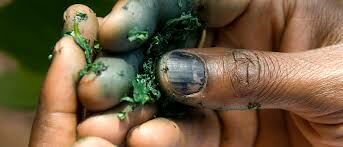
GOLDEN BLUE
By Cynthia Garbutt
The secret alchemy of this wild and magical weed, whose harvest dominated the Southeast territories of North America in the mid-1700s, lies in the hands of a few tribal African slaves, who are unaware of their powerful skills. And the enormous wealth they create for elite British plantation owners, who must soon choose between loyalty to the Crown or become US patriots.
SYNOPSIS:
The long generational legacy of the slaves' knowledge, skill, innovation, and adaptability, which are both captivating and intriguing, is at the heart of the narrative. This story is based on the real-life documented history of one of the most successful indigo plantations in SE North America and supported by the locations and remains of the actual area and its environs. During the time that it was controlled by the British Empire and owned by the privileged. Whom the government granted enormous tracts of land that they turned into free-labor camps that operated under the most inhumane treatment and conditions, called plantations.
On a DIY scale, I actually grow, harvest, ferment and process indigo for my sustainable and artisanal fashion brand, The New Zion. So I have a keen interest in indigo's history and use as a sustainable plant. Organic indigo is experiencing a re-birth as an agricultural commodity among "slow fashion" and artisanal fashion brands. Please watch video done by the University of Florida
Please have a look at my Go Fund Me: https://www.gofundme.com/f/research-for-film-script-us-enslaved-indigo-makers-of-1770s for this film. Any help is appreciated. I need funds to:
1. Access to more original research documents and drawings (from the 1700s, at the Library of Congress, National Archives in London and Edinburgh, where I've done previous research regarding the British and Scotish ancestry of my family while living in the UK. (My research there, uncovered records of my maternal great-father's occupational studies and work as an argonomist from Scotland, his formal education in England and his migration to Central America to work for my great-grandmother's family mahogany plantation and later as a farmer and rancher in northern Honduras. Where he planted for Chiquita Brands and Elders and Fyffes Ltd now United Fruit Co.)
2. Site visits to related historical landmarks and museums throughout the southeastern US, former indigo plantations in Northeastern Florida, coastal South Carolina and Georgia and Destrehan, Louisiana (Louisiana is my home state. But I lived in the UK, Germany and now in Miami Beach, Florida) and,
3. Documentation via interviews and filming with the ancestors or black slaves and indentured slaves that worked on indigo plantations.
4. Documentation via interviews and filming with current Black organic indigo growers and workers thoroughout the US southern states.
5. A visit and documentation of the people and the areas of West Africa (especially the Hausa of Nigeria) where indigo harvesting, processing and fabric dyeing is still a tradition (artisanal indigo dyeing has become a staple in luxury brand fashion).
It is the talent and skills of these people that made indigo such a valued commodity in the Caribbean and Southeastern US and put excessive profits in the hands of British plantation owners, the majority of whom were absentee homesteaders.
 Register / Log In

Rated this logline
Rated this logline